
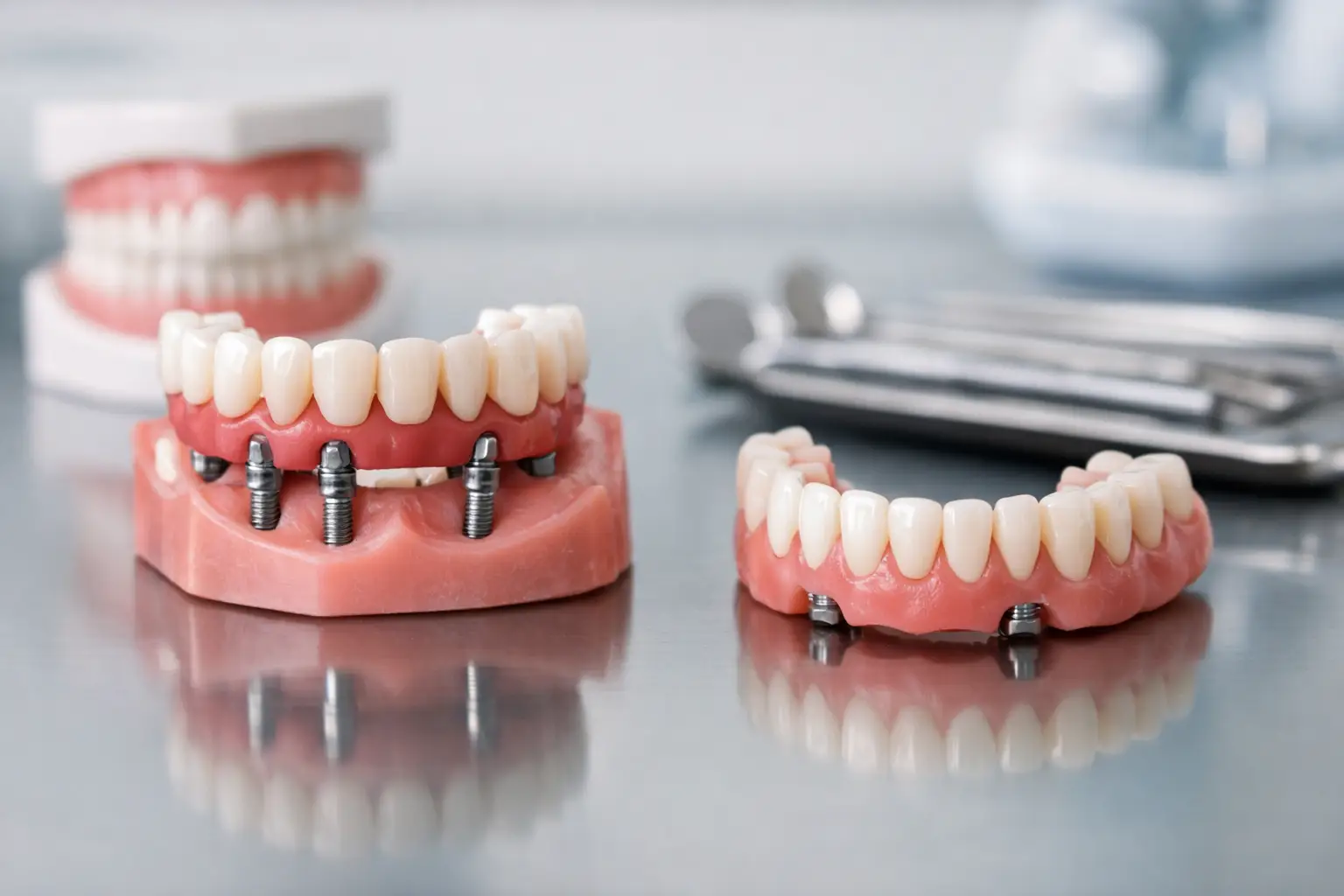
When you are traveling abroad for full-mouth implants, leaving without teeth is usually one of the biggest concerns. Patients often ask, “does all on 4 include temporary teeth?” In many All-on-4 treatment plans, the answer is yes: you receive a temporary full-arch bridge after your implants are placed, so you can smile, speak, and leave the clinic with teeth in place during healing.
But the right answer is not simply yes or no. A temporary bridge depends on your oral health, bone quality, the stability of the implants on surgery day, and the exact package you choose. Knowing what is included – and what the temporary teeth are designed to do – makes planning an Antalya dental journey far less stressful.
Does All-on-4 Include Temporary Teeth?
All-on-4 is a full-arch implant solution that uses four strategically positioned dental implants to support a complete upper or lower set of teeth. After any remaining failing teeth are removed, implants are placed in the jaw and a temporary restoration may be fitted on the same day or shortly after.
This is often called immediate loading or same-day teeth. The bridge is usually fixed in place, rather than a removable denture, although the clinical approach varies. It provides an attractive, functional smile while your implants integrate with the jawbone.
At Letsmile Turkiye, temporary teeth are commonly built into full-mouth treatment planning, alongside items such as panoramic X-rays, hotel accommodation, VIP transfers, and the treatment timeline. Still, every patient should receive a personalized confirmation after an online consultation and examination. A package should state clearly whether the temporary bridge, final bridge, necessary extractions, and both treatment visits are included.
What Temporary All-on-4 Teeth Are Really For
A temporary bridge is not a low-quality afterthought. It is a planned stage of implant treatment. It restores the appearance of a full smile immediately and helps you avoid the uncomfortable experience of wearing no teeth while the surgical sites heal.
It also gives your dentist useful information before the final teeth are made. Your bite, speech, lip support, smile line, and facial appearance can be reviewed in real life. If a tooth length feels too long, speech needs time to adapt, or your bite requires a small adjustment, those details can be addressed before the final restoration is created.
Temporary teeth are usually made from acrylic or composite-based materials. They are intended to look natural and feel comfortable, but they are not designed to take the same forces as a final zirconia bridge. Think of them as the protected healing phase that helps lead to a beautiful, lasting smile.
Fixed temporary bridge or removable temporary denture?
Many patients picture temporary teeth as a traditional denture that must be removed every night. With a successful immediate-load All-on-4 case, the temporary bridge is generally screw-retained to the implants and can only be removed by the dentist.
However, a removable temporary denture may be recommended in certain situations. For example, an implant may not achieve enough initial stability, bone grafting may be required, or your dentist may need to protect a complex healing area. This is not a failure of treatment. It is a careful decision to give the implants the best possible conditions for long-term success.
When Are Temporary Teeth Placed?
For suitable candidates, the process can move quickly. You arrive for your first treatment visit, complete clinical records and scans, have extractions if needed, and receive the implants. Your temporary bridge may then be fitted the same day or within the next few days, depending on the treatment plan and lab workflow.
That does not mean every case is completed in one appointment. The dental team needs to assess gum health, infection, bone volume, bite pressure, and the stability of each implant. Patients with severe bone loss, uncontrolled gum disease, certain medical conditions, or heavy grinding habits may need a different schedule.
For international patients, this is why a detailed treatment plan matters more than a generic promise of “teeth in a day.” A well-organized dental package should explain how many days you need in Antalya, when your temporary teeth will be fitted, and when you should return for your final full-arch restoration.
How Long Do You Wear All-on-4 Temporary Teeth?
Most patients wear their temporary bridge throughout the implant healing period, commonly around three to six months. During this time, the implants gradually bond with the jawbone in a process called osseointegration.
Your exact timeline may be shorter or longer. Healing can be influenced by the condition of your bone and gums, whether you smoke, your general health, and whether additional procedures were needed. Your dentist will schedule reviews and let you know when the implants are ready to support the final bridge.
The final teeth are typically made from stronger, long-lasting materials, often zirconia. This is the stage where shape, shade, bite, and cosmetic details are finalized to create the radiant Hollywood Smile you came for.
Eating, Speaking, and Caring for Temporary Teeth
You can usually speak and smile with confidence soon after receiving temporary teeth, but your mouth needs time to adjust. Some patients notice minor changes in pronunciation during the first days. Reading aloud and speaking normally helps your tongue adapt.
Food choices are more significant. Your temporary bridge and healing implants should not be treated like natural teeth immediately after surgery. Follow the soft-food guidance from your dentist and avoid biting hard foods with the front teeth. Crusty bread, nuts, raw vegetables, chewy candy, and tough meat can place too much force on the restoration during the critical healing phase.
Cleaning is equally important. A fixed temporary bridge requires careful brushing around the gumline, along with any cleaning aids recommended by your clinical team. Depending on your bridge design, this may include an oral irrigator, interdental brushes, or specialized floss. Good hygiene protects your gums and helps prevent inflammation around the implants.
Questions to Ask Before Booking Your All-on-4 Package
Price comparisons are useful, particularly when you are comparing treatment in Turkey with costs in the UK, Europe, or the United States. Yet the lowest advertised price does not always represent the complete cost of your treatment. Before committing, ask direct questions about the temporary and final teeth.
Confirm whether your quoted price includes four implants per arch, required extractions, the immediate temporary bridge, scans and X-rays, sedation if needed, final zirconia teeth, and follow-up appointments. You should also ask whether accommodation and airport transfers are part of the package, how many nights are included, and whether a second trip is required for the final bridge.
Ask what happens if your implants are not suitable for immediate loading on the day of surgery. A trusted clinic will explain the alternative plan rather than making an unrealistic guarantee. You should also discuss medical history, medications, smoking, teeth grinding, and any previous dental problems during your free online consultation.
Can temporary teeth break?
They can chip, crack, or loosen if they are exposed to excessive force, just as any dental restoration can. This is one reason patients are asked to follow a soft diet and avoid using temporary teeth to bite hard foods. If an issue occurs while you are still in Antalya, notify the clinic promptly so it can be assessed and adjusted.
Will temporary teeth look natural?
They are designed to give you a complete, presentable smile during healing. Although the final zirconia bridge offers greater durability and more refined cosmetic customization, modern temporary bridges can still make a dramatic difference in your confidence, facial support, and everyday comfort.
The most reassuring All-on-4 plan is one that treats temporary teeth as an essential clinical stage, not a vague extra. Request a written treatment schedule, understand your healing responsibilities, and make sure your package supports both your smile transformation and your travel experience from arrival to final fitting.