
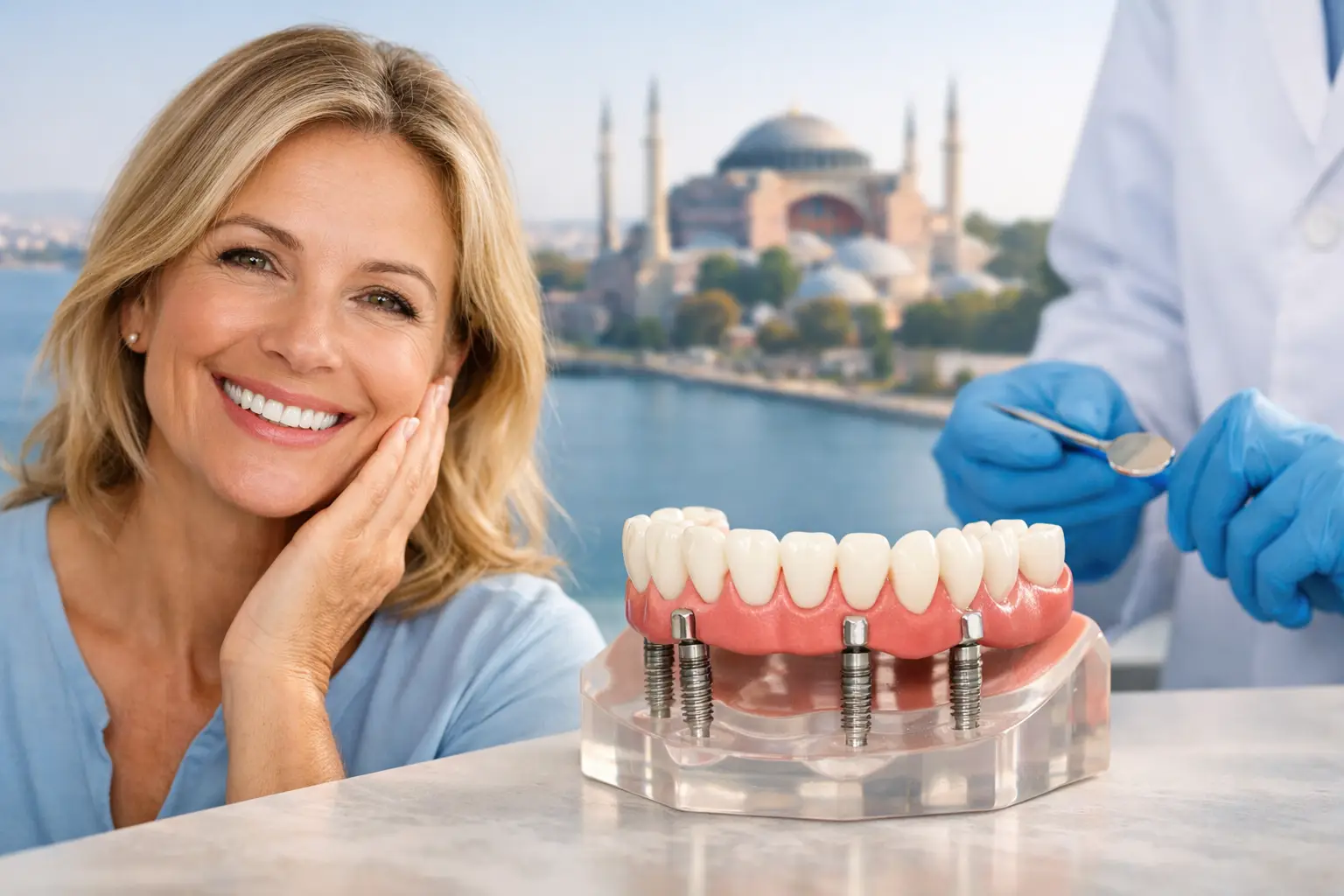
A loose denture can turn ordinary moments – ordering a meal, laughing in photos, speaking clearly – into something you second-guess. For people with failing, missing, or severely worn teeth, all on 4 dental implants turkey can offer a fixed full-arch solution with a more organized treatment journey and a lower overall cost than treatment in many high-cost markets.
The appeal is not simply getting dental work abroad. It is replacing an unstable smile with teeth designed to look natural, feel secure, and support everyday confidence. The right result depends on careful planning, experienced clinical care, realistic expectations, and enough time for healing.
What Are All-on-4 Dental Implants?
All-on-4 is a full-mouth rehabilitation technique that uses four strategically placed implants to support a complete upper or lower arch of replacement teeth. Rather than placing an implant for every missing tooth, the dentist positions two implants toward the front of the jaw and angles two at the back to make the best use of available bone.
For many patients, this approach can avoid or reduce the need for bone grafting. It may also allow a temporary fixed bridge to be fitted shortly after surgery, so you do not need to return home without teeth during the healing period. That temporary restoration is not the final smile, however. It protects the implants and gives you the appearance and function of teeth while your jaw heals.
After healing, a final full-arch bridge is created. Depending on your treatment plan, this may use materials selected for strength, natural esthetics, and bite performance. Your dentist will consider the shape of your face, gum line, bite, and preferred tooth shade when designing a beautiful, lasting smile.
Who Is a Good Candidate for All on 4 Dental Implants in Turkey?
All-on-4 may suit adults who have lost most or all of their teeth, wear uncomfortable dentures, or have teeth affected by advanced decay, gum disease, repeated fractures, or failed crowns and bridges. It can also be an option when keeping individual teeth would require extensive treatment with uncertain long-term results.
A consultation is essential because the procedure is not based on a single rule such as age or the number of missing teeth. The dentist needs to assess your medical history, oral health, jawbone volume, gum condition, bite, and expectations. Panoramic X-rays and, where appropriate, more detailed imaging help the clinical team plan implant positions safely.
Patients with uncontrolled diabetes, active gum infection, heavy teeth grinding, certain bone conditions, or smoking habits may need additional care or may not be suitable for immediate loading. This does not automatically rule treatment out, but it can change the timeline, implant approach, or the need for healing before a fixed temporary bridge is placed.
Why Antalya Is Chosen for Full-Arch Treatment
Dental tourism works best when the clinical and travel sides of the journey are organized together. Antalya gives international patients a practical setting for planned dental visits, with direct travel options from many locations, quality accommodation, and time to recover in a relaxed environment.
At Letsmile Turkiye, full-arch care is planned as a treatment package rather than a series of disconnected appointments. Patients can receive clear guidance on the number of treatment days, hotel accommodation, VIP airport and local transfers, panoramic X-rays, temporary teeth, and extractions when required. Exact inclusions should always be confirmed in your personalized quote, because every mouth has different clinical needs.
The cost advantage is often meaningful, but it should not be the only reason to choose a clinic. Ask who will plan and perform your treatment, what implant system and final restoration materials are proposed, how temporary teeth are handled, and what support is available after you return home. A lower price has value only when it is paired with transparent clinical standards and a treatment plan that makes sense for you.
Your All-on-4 Treatment Timeline
A successful treatment trip starts before you fly. Most patients begin with a free online consultation, sharing clear photos and any recent X-rays they have available. This gives the dental team an early understanding of your concerns and allows them to prepare a preliminary plan. Your in-clinic examination and imaging will confirm the final recommendation.
First visit: surgery and temporary teeth
During the first visit, the dentist examines your mouth, takes diagnostic images, and confirms the implant plan. Teeth that cannot be saved may be extracted, and the implants are placed into the jawbone. If your bone quality and implant stability are appropriate, a fixed temporary full-arch bridge can usually be fitted during the same treatment period.
You should expect swelling, tenderness, and an adjustment period. Soft foods, careful cleaning, prescribed medications, and following the dentist’s instructions are especially important at this stage. The temporary bridge is designed for healing, not for chewing hard foods or testing your new bite with excessive force.
Healing at home
Implants need time to integrate with the jawbone. This process, called osseointegration, commonly takes several months. During this period, you will wear the temporary teeth and maintain regular communication with the clinic if questions arise.
The timeline varies. Some patients heal quickly, while others need a longer period because of bone density, general health, or the complexity of their case. A clinic that promises the exact same schedule to every patient is not accounting for the realities of implant dentistry.
Second visit: your final smile
Once healing is confirmed, you return for scans, bite records, shade selection, and fitting of the final bridge. This is the stage where function and esthetics are refined. Your final teeth should be checked for comfort, speech, bite balance, and appearance before you leave.
A great result is not just bright teeth. It is a smile that suits your face, supports your lips, and lets you eat and speak with greater ease.
All-on-4 vs. All-on-6: Which Is Better?
All-on-4 and All-on-6 both restore a complete arch, but they are not interchangeable. All-on-6 uses six implants instead of four, which can provide additional support and distribute biting forces across more implant sites. It may be recommended for patients with sufficient bone and higher bite demands.
All-on-4 can be an excellent, efficient solution when the jaw anatomy supports it. All-on-6 may offer extra stability in some cases, but more implants do not automatically mean the best treatment for every person. The right decision comes from imaging, bone assessment, bite analysis, and the dentist’s clinical judgment – not from choosing the package with the larger number.
What Should an All-on-4 Package Include?
When comparing all on 4 dental implants in Turkey, look beyond a headline price. A properly explained package should clarify the clinical stages and the travel support you receive. You should know whether it includes consultation and imaging, extraction of unsuitable teeth, four implants per arch, a temporary bridge, the final bridge, prescribed medications, hotel nights, and airport or local transfers.
Also ask whether the quote covers both visits or only the surgical stage. Final restorations are often completed after healing, so an unusually low figure may not represent the complete treatment journey. Ask about potential additional costs for bone grafting, sedation, additional implants, or unexpected clinical findings. Transparent answers protect you from unpleasant surprises and help you compare plans fairly.
Caring for Your New Teeth
Fixed implant teeth are strong, but they still need daily care. Brush thoroughly, clean beneath the bridge with the products your dentist recommends, and attend professional hygiene appointments. If you grind your teeth, a night guard may be advised to protect the restoration and implants.
Avoid using your new teeth as tools to open packaging, and be cautious with extremely hard foods. If you notice a change in your bite, swelling, persistent discomfort, or movement in the bridge, arrange a professional review promptly. Long-term success is a partnership between precise treatment and consistent home care.
Your smile should never be rushed into a one-size-fits-all plan. Send your photos, ask direct questions, and request a treatment timeline that explains both the first visit and the final restoration. A confident new smile begins with clear information – and a plan built around your health, your travel needs, and the life you want to enjoy with your teeth.